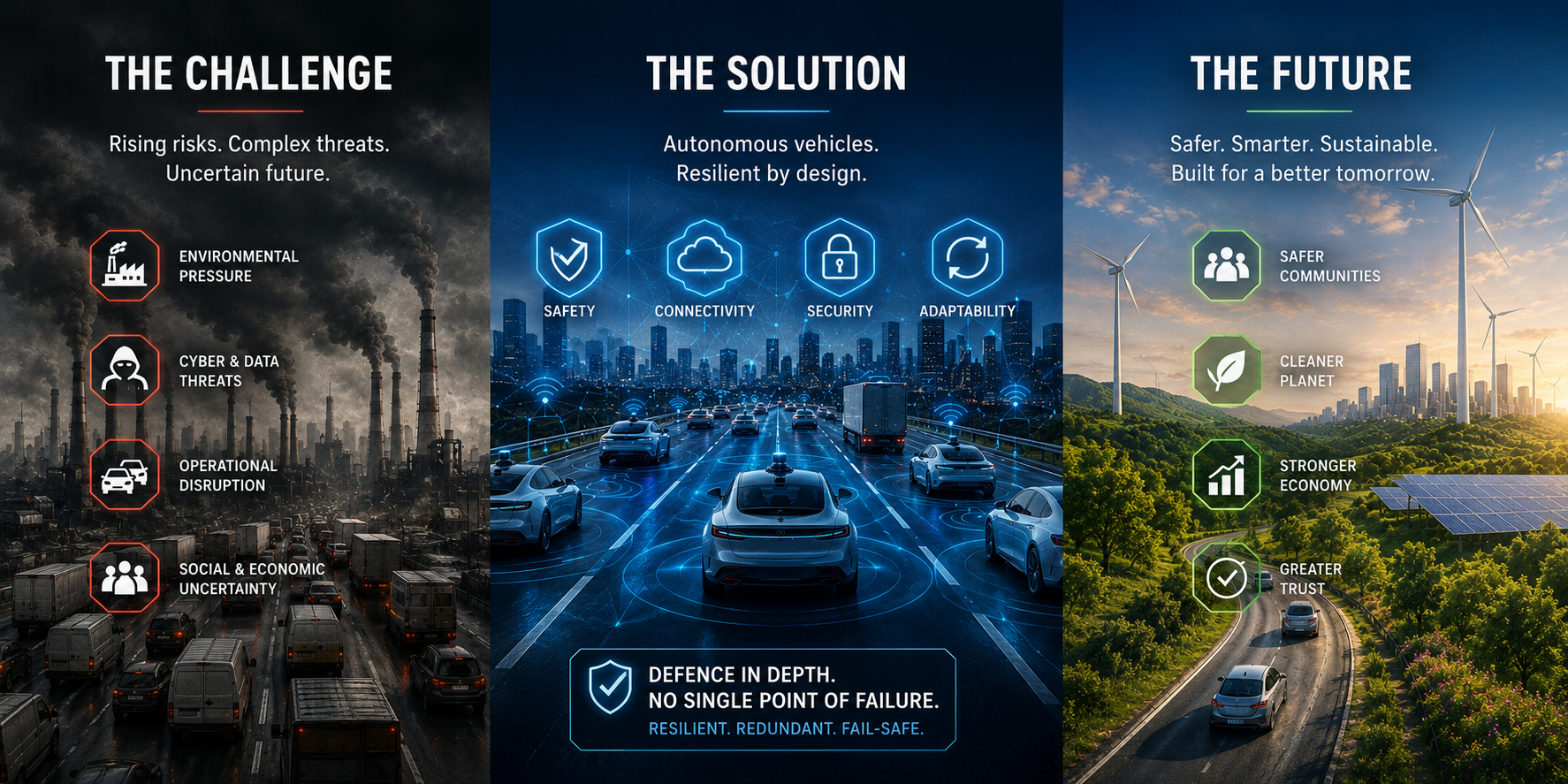
Introduction: the transition may be political before it is technological
The eventual transformation of road transport by autonomous vehicles may depend less upon the moment at which computers become capable of driving than upon the moment at which governments become willing to accept political responsibility for allowing them to do so.
The first fatal collision caused unambiguously by an authorised autonomous vehicle would almost certainly receive extraordinary scrutiny. A fatal road collision involving an ordinary driver is tragic but familiar; a comparable collision involving a machine would raise questions about the manufacturer, software developer, regulator and government that authorised the system. Consequently, politicians may initially demand a substantially higher standard of evidence from autonomous vehicles than society historically demanded from human motorists.
That does not, however, mean that Britain is presently refusing to contemplate autonomous vehicles. In fact, the legal transition has already begun. The Automated Vehicles Act 2024 established a framework under which self-driving vehicles can eventually be authorised for use on British roads. The government’s implementation programme currently aims to establish the full framework in 2027. The Act requires authorised systems to achieve safety equivalent to or better than that expected of a “careful and competent” human driver, while an authorised self-driving entity can be held responsible for the behaviour of the automated system.
This considerably changes the starting point for any prediction. The likely political argument of the 2030s is therefore unlikely to be simply should self-driving vehicles be legal? It may instead become where, under what circumstances, and at what demonstrated level of risk should they be allowed to operate without human supervision?
There is also a geographical distinction worth making. The core regulatory provisions of the Automated Vehicles Act apply to Great Britain—England, Wales and Scotland—rather than Northern Ireland, which has a separate road-traffic legal system. A paper referring to “the UK” throughout should therefore acknowledge this complication.
Phase One: freight becomes the economic spearhead
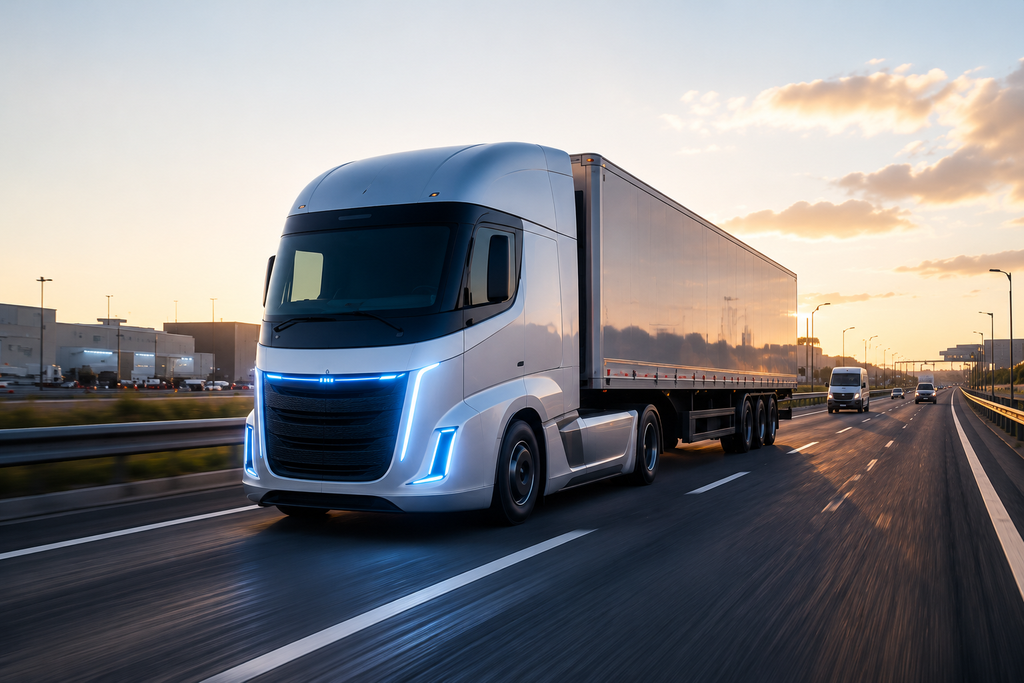
The first truly transformative application may not be the privately owned autonomous family car at all. It may be freight.
Road haulage combines several characteristics particularly favourable to automation. HGVs travel enormous distances, frequently repeat predictable journeys, impose substantial labour costs on operators, and spend large portions of their journeys on comparatively structured roads such as motorways. In 2025, GB-registered HGVs travelled approximately 19 billion vehicle kilometres, moving 1.53 billion tonnes of goods. Driver recruitment also remains a constraint: 26% of HGV businesses reported driver vacancies in the fourth quarter of 2025.
This supports the basic economic logic behind a “motorway first, city streets later” transition.
However, describing the shortage of drivers as insurmountable would overstate the evidence. The present shortage is considerably smaller than at its post-pandemic peak: 43% of HGV businesses reported vacancies in the fourth quarter of 2021. Automation would therefore be better presented not as the only possible solution to an impossible labour shortage, but as an increasingly attractive solution to a persistent combination of wages, recruitment difficulties, retirement, working-time restrictions and the economic value of keeping expensive vehicles operating for longer periods.
The result could be the emergence of hub-to-hub autonomous freight.
An HGV might leave a distribution centre under human control, enter a designated autonomous motorway corridor, complete several hundred kilometres automatically, and transfer back to a human driver—or another vehicle—near its destination. Human labour would initially remain concentrated around depots, urban roads, loading operations and the difficult “last mile”, while automation would attack the long-distance portion where driving conditions are comparatively predictable.
Interestingly, existing British legislation already anticipates the possibility of vehicles that drive themselves only for part of a journey. The Automated Vehicles Act describes a “user-in-charge” model in which the automated system can perform part of a journey before issuing a transition demand requiring a qualified human to resume control.
Thus the hybrid system imagined here is not especially radical. What is speculative is its scale.
Private motorways—or automated freight concessions?
One part of the original prediction requires substantial modification.
Large logistics companies could not straightforwardly approach financially pressured local authorities and purchase lanes on the M1, M6 or M25. England’s Strategic Road Network is owned by the Secretary of State and operated by National Highways; local authorities do not control those motorways. The network consists of more than 4,500 miles of motorways and major A-roads and already carries roughly two-thirds of England’s freight.
The underlying idea nevertheless has a plausible precedent.
Britain already has a privately funded motorway concession in the form of the M6 Toll. Midland Expressway Ltd was awarded the concession to build and operate it, and the road remains privately operated under that arrangement until 2054.
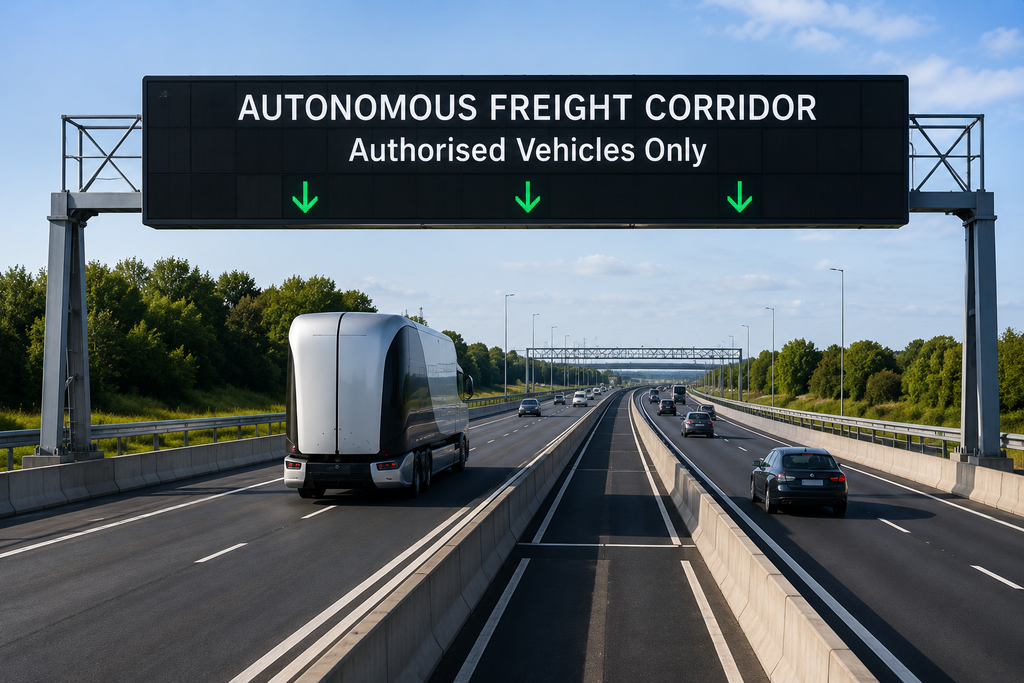
Consequently, a more credible prediction would be the development of government-authorised automated freight corridors, possibly financed or operated through concessions, public-private partnerships or dedicated infrastructure agreements.
Rather than Amazon, DHL or a major supermarket simply “buying Lane 1 of the M1”, a consortium of logistics businesses might finance infrastructure allowing authorised autonomous HGVs to use a specially managed corridor between major logistics hubs. Ports, motorway service areas, distribution parks and rail-freight terminals would become natural interchange points.
The period 2035–2045 remains a defensible speculative window for this type of system, although it should explicitly be described as a scenario rather than a forecast supported by present government commitments.
The safety tipping point
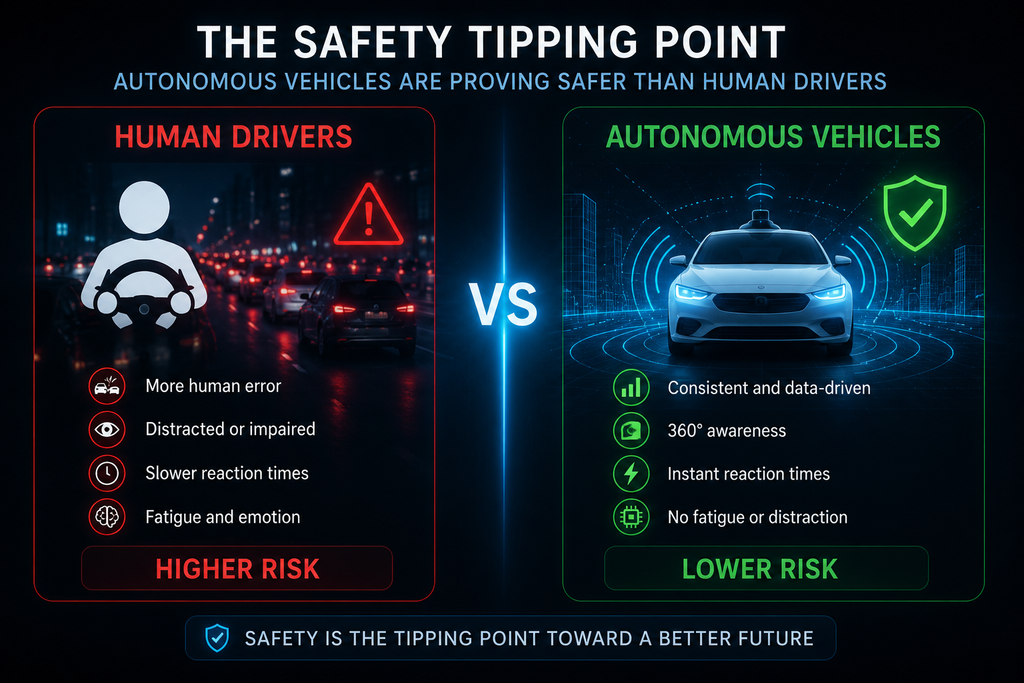
The most interesting stage occurs if autonomous vehicles establish a substantial safety advantage over humans.
Britain still pays an enormous human price for road mobility. In 2025 there were 1,538 reported road fatalities and 29,918 people killed or seriously injured in Great Britain. Behaviour or inexperience was the most common category of road-safety factor recorded by police, while ineffective observation was recorded in half of fatal or serious collisions to which a road-safety factor was assigned.
This provides the ethical foundation for the strongest version of the autonomous-vehicle argument.
If machines eventually demonstrate dramatically lower collision rates than people, continuing to permit unrestricted manual driving might cease to look like governmental neutrality. It could increasingly resemble a conscious decision to tolerate an avoidable source of death.
There is already some evidence that highly developed autonomous systems can outperform human benchmarks within restricted operating environments. A peer-reviewed analysis of 7.14 million driverless Waymo miles in several American cities reported an injury-associated crash rate of approximately 0.6 incidents per million miles, compared with a human benchmark of 2.8.
That result should not be exaggerated. It does not prove that autonomous vehicles are five times safer everywhere. Waymo’s vehicles operated in particular American cities, under particular operational design domains, using a particular system. British country lanes, motorway roadworks, snow, temporary traffic signals, cyclists, unusual junctions and HGV operation create different problems.
Nevertheless, it demonstrates that “a machine could never be safer than a person” is no longer a defensible assumption.
If, by the 2040s, Britain possessed billions of miles of operational evidence demonstrating a substantial autonomous safety advantage, the political incentives could reverse.
Today a minister might fear being remembered as the politician who authorised a machine that killed somebody. A future minister might equally fear being asked why thousands of people continued to die in preventable human-driven crashes after a demonstrably safer technology existed.
That creates the possibility of a profound inversion in political responsibility.
At first:
“Why did you allow the machine to drive?”
Later:
“Why did you still allow the human to drive?”
That inversion may ultimately matter more than any individual technological breakthrough.
A ban on human driving would probably arrive geographically
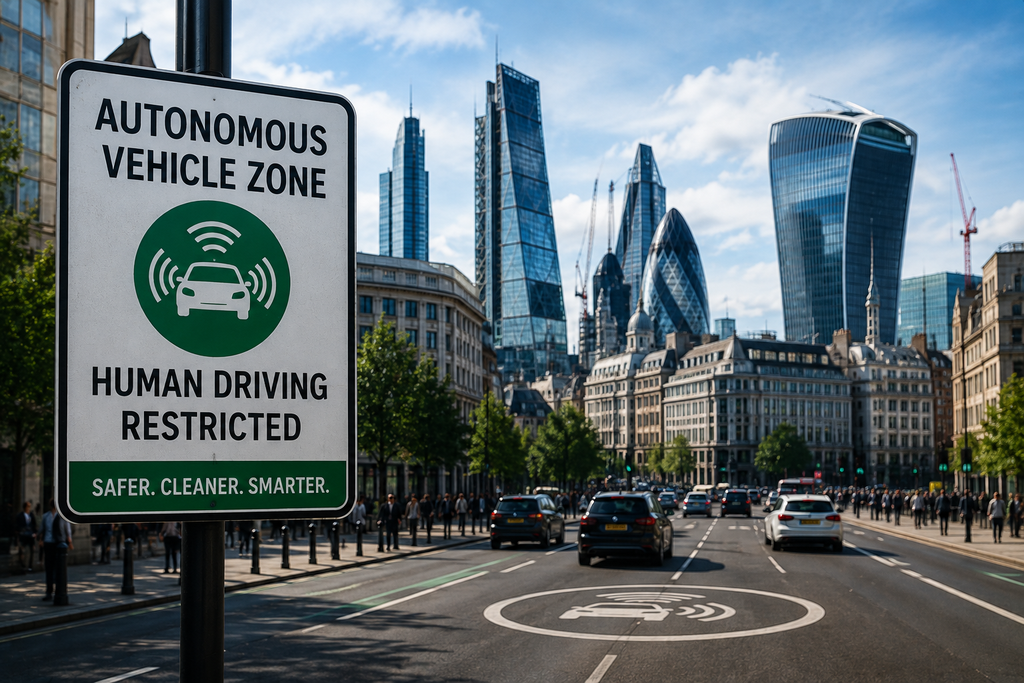
Even if this change occurred, a nationwide prohibition on manual driving overnight is highly improbable.
The more believable mechanism is progressive geographical restriction.
Dense urban areas provide the most obvious starting point because congestion, pedestrian risk, pollution, scarce road space and public transport alternatives are concentrated there. Cities have already demonstrated that road access can be differentiated according to vehicle characteristics through mechanisms such as emissions zones and road-user charging.
It is important not to overstate the existing precedent. London’s Congestion Charge does not prohibit internal-combustion vehicles, and an emissions zone such as ULEZ principally imposes standards and charges rather than representing a blanket ICE ban. Nevertheless, these schemes establish the broader political principle that access to particular public roads can depend upon characteristics of the vehicle.
A future city might therefore create an Automated Vehicle Zone.
Initially, autonomous vehicles might receive preferential lanes, reduced charges or access to restricted districts. Later, manually driven vehicles might pay an additional risk charge. Eventually, ordinary manual driving could be prohibited within a particular high-density area except for emergency, historic, specialist or authorised vehicles.
The policy could then expand outward.
Central London might be followed by other major cities. Urban restrictions could be followed by motorway restrictions. Certain motorway lanes might become automation-only before entire motorway sections did. Only much later could the presumption change nationally from “humans may drive unless prohibited” to “machines drive unless manual operation is specifically permitted.”
Under that scenario, manual driving does not disappear. It undergoes something similar to the transformation of horse riding: once fundamental transport, later increasingly recreational.
Private circuits, specialist rural environments and designated roads might preserve manual driving long after it ceased to be the normal means of transport.
Political conflict and the HGV workforce
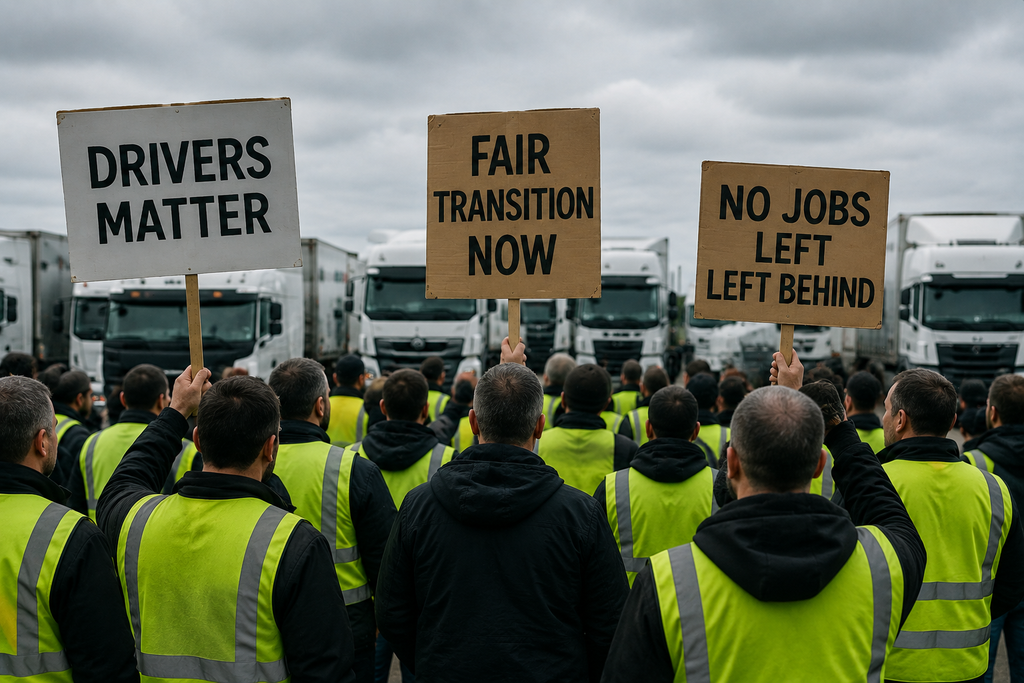
This transition would create substantial economic winners and losers.
Professional driving provides employment to people whose skills, identities and livelihoods are strongly connected to road transport. A rapid movement toward driverless freight could therefore provoke industrial opposition.
Strikes, political campaigning, demands for transition protections and resistance from professional drivers are plausible. Government might respond with retraining schemes, redundancy protections, phased implementation, restrictions on fleet conversion or requirements to retain remote supervisors.
However, predicting widespread sabotage of automated lanes should be treated much more carefully. It is conceivable as an extreme scenario, but there is presently no evidential basis for asserting that displaced HGV drivers would systematically sabotage autonomous infrastructure. In an academic paper it would be better presented as a security scenario arising from social conflict, rather than an expected behaviour of a particular occupational group.
Automation could also transform rather than simply eliminate some jobs. Long-distance drivers might be replaced partly by local drivers, remote fleet supervisors, autonomous-vehicle technicians, depot staff, safety operators and logistics controllers.
The labour question is consequently not merely “how many driving jobs disappear?” It is also “how much bargaining power transfers from geographically dispersed drivers to highly capitalised fleet operators?”
That may become one of the central political questions surrounding autonomous freight.
Cybersecurity: the danger is not necessarily one giant computer
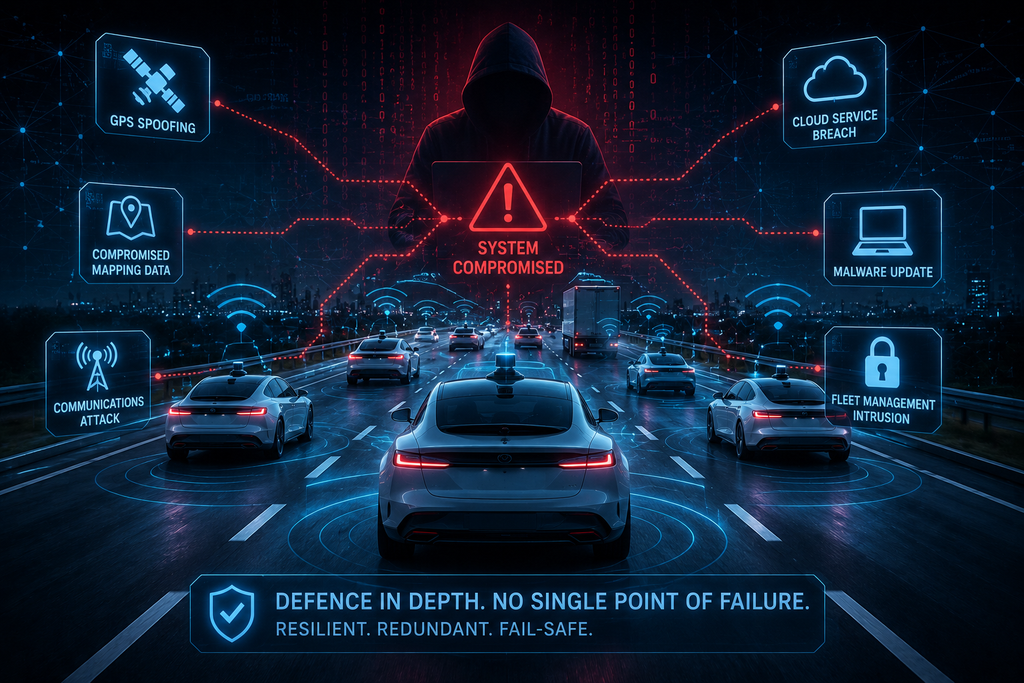
A completely automated transport system would introduce an entirely different category of infrastructure risk.
However, it probably would not require every British vehicle to be controlled continuously from one national central server.
A safer architecture would almost certainly keep fundamental vehicle functions—perception, braking, steering and basic route execution—inside the vehicle itself. External systems could supply mapping, traffic information, software updates, fleet instructions and communications without becoming necessary for every millisecond of vehicle operation.
Indeed, existing UK cybersecurity guidance specifically recommends defence in depth, states that systems should not depend upon single points of failure, requires secure software management and says vehicles should remain resilient and fail-safe when systems or sensors are compromised.
The more serious threat is correlated failure.
If ten human drivers suffer ten unrelated medical emergencies, ten vehicles may crash independently.
If ten million vehicles contain the same exploitable software component, one successful attack could theoretically affect an entire fleet.
A malicious software update, compromised certificate authority, satellite-navigation spoofing attack, corrupted mapping database, fleet-management intrusion or vulnerability in a commonly used sensor could therefore create consequences radically different from traditional road accidents.
Government regulation already recognises this problem. Current policy development explicitly includes cybersecurity throughout the vehicle’s service life and extends security requirements to operational control centres.
This makes redundancy critical.
An autonomous vehicle should ideally remain capable of executing a safe minimum-risk manoeuvre when communications disappear. Loss of mobile data should not mean loss of steering. Failure of cloud services should not disable braking. A compromised navigation system should be cross-checked against onboard perception.
In other words, Britain’s future automated road network would ideally resemble the internet more than a railway signalling system: interconnected, but without requiring a single national computer to issue individual steering instructions.
Would cars still have steering wheels?
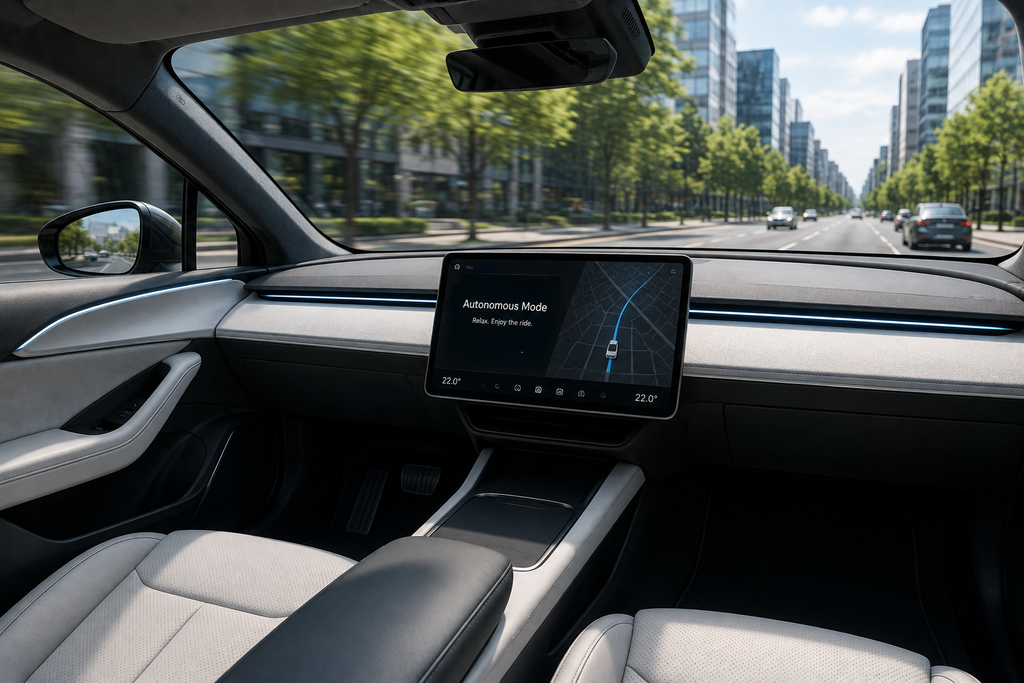
Some probably would. Others probably would not.
During the transitional period, vehicles capable of automation only under certain conditions have an obvious reason to retain conventional controls. Current British legislation explicitly anticipates systems that hand control back to a user-in-charge.
But if a vehicle eventually achieves full automation throughout its intended operating domain, retaining a steering wheel purely as an emergency device is not automatically safer.
A human passenger who has spent an hour reading, sleeping or working is unlikely to be an ideal emergency controller when suddenly confronted with a situation that defeated an advanced automated system. Human-factors research and regulation therefore have to distinguish genuine human-supervised automation from systems capable of reaching a safe state independently.
Consequently there may eventually be two categories: dual-mode vehicles retaining manual controls, and genuinely driverless vehicles without meaningful driving controls at all.
The climate argument—and its biggest weakness
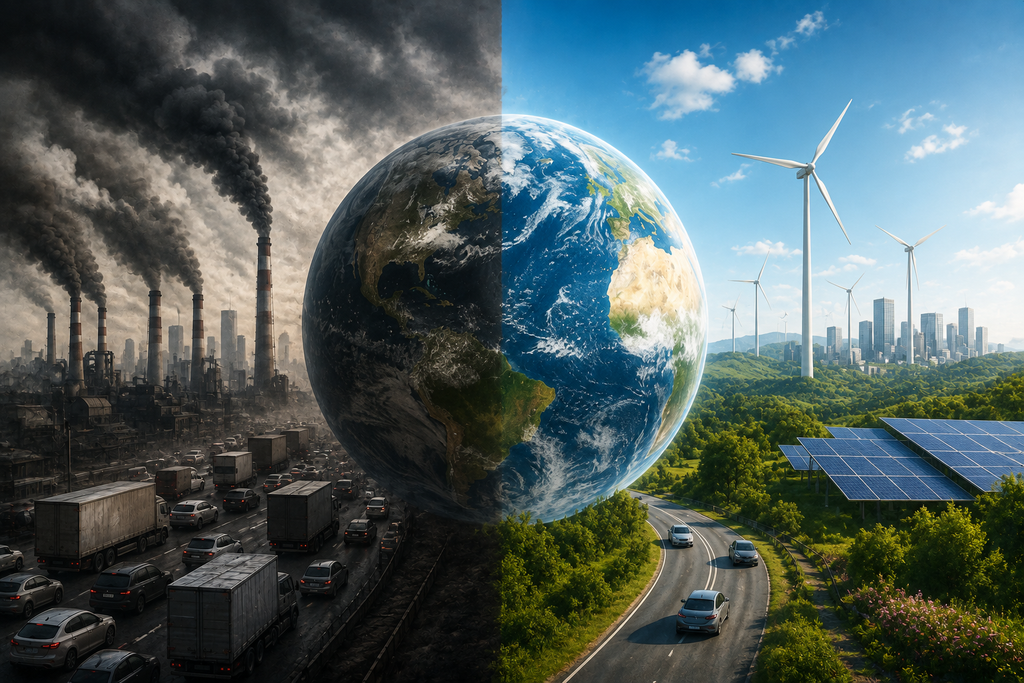
Transport provides a powerful political argument for transformation. Domestic transport accounted for approximately 30% of UK greenhouse-gas emissions in 2024, and road vehicles constitute the overwhelming majority of domestic transport emissions.
But autonomy itself is not decarbonisation.
An autonomous diesel SUV stuck in traffic still burns diesel.
Automation could improve efficiency through smoother acceleration, optimised routing, reduced stop-start behaviour and—in freight applications—closer coordination between vehicles. It may also permit lighter or differently designed vehicles eventually.
Yet automation could simultaneously make road transport more attractive. A commuter who currently refuses a two-hour drive because it is exhausting may willingly accept it if those two hours can be spent working or watching television. Empty autonomous vehicles could reposition themselves between passengers. Parents might send an empty car to collect children. Businesses could operate additional delivery vehicles because the marginal cost of driver labour had disappeared.
Academic reviews therefore find that the environmental consequences of autonomous vehicles depend heavily upon penetration, sharing, vehicle utilisation and interaction with other transport modes rather than automation alone.
This makes electrification the indispensable partner to automation.
The strongest future scenario is not:
human petrol car → autonomous petrol car.
It is:
human-controlled ICE fleet → increasingly electric fleet → electric automated fleet coordinated to minimise congestion, energy consumption and unnecessary journeys.
If autonomous vehicles increase total kilometres travelled substantially, some efficiency gains could disappear. Conversely, if electrification, shared mobility, intelligent routing and automation occur together, the environmental improvement could be dramatic.
Thus it would be inaccurate to describe the human behind the steering wheel as the fundamental source of road-transport CO₂. The combustion engine is the larger culprit.
Human driving does, however, introduce inefficiencies through unnecessary acceleration, braking, congestion formation, poor route choice and collisions. Automation could attack those secondary losses while electrification attacks the primary emissions source.
A revised speculative timeline
A useful forecast would therefore look less like a sudden autonomous revolution and more like overlapping transitions.
| Period | Plausible development |
|---|---|
| 2027–2035 | Regulatory deployment begins; restricted autonomous passenger services and logistics applications expand; extensive accumulation of real-world safety data. |
| 2030–2040 | Increasing motorway automation, depot-to-depot freight systems and possibly dedicated or preferential automated freight infrastructure. Human drivers remain important for complex local operation. |
| 2035–2045 | If safety and economics prove favourable, widespread hub-to-hub autonomous HGV operations become plausible. Insurance and road-pricing policy may begin favouring autonomous operation. |
| 2040–2050 | Selected urban areas could introduce strong incentives or requirements for automated operation. Manual vehicles become increasingly restricted in particularly dense environments. |
| 2045–2060+ | If—and this is the crucial condition—autonomous systems have demonstrated overwhelming safety advantages across billions of miles, automation-only motorways or urban road networks become politically conceivable. |
| Beyond that | Manual driving could eventually become a licensed recreational or specialist activity rather than the default means of operating a vehicle. |
The dates should remain deliberately broad. Forecasting adoption is much harder than forecasting technical capability because roads, vehicles and legislation turn over slowly. Britain has more than a century’s worth of infrastructure designed around human-operated vehicles, and even extraordinarily capable technology cannot replace that ecosystem overnight.
The central paradox
The central prediction can therefore survive scrutiny, but in modified form.
The transition toward autonomous vehicles may begin with politicians being frightened of trusting machines and end with politicians being frightened of continuing to trust humans.
Between those points will lie several decades of hybrid infrastructure, incomplete automation, legal disputes, labour conflict, cybersecurity failures, successful deployments and public arguments over what constitutes an acceptable level of risk.
At first, autonomous vehicles will be asked to prove that they are as safe as people. British law already effectively establishes that requirement: the safety framework is intended to ensure performance equal to or better than a careful and competent human driver.
But if autonomous systems eventually become substantially safer than human drivers, the philosophical question becomes more uncomfortable.
In 2025 Britain still recorded 1,538 road deaths.
Suppose a future automated system could reduce that number not by five or ten percent, but by 80 or 90 percent.
At what point does the freedom to drive manually outweigh the preventable deaths caused by maintaining that freedom?
That—not whether a computer can successfully navigate the M25—may eventually become the defining political question of the autonomous age.
The ban that may never need to happen: insurance and the voluntary death of manual driving
There is, however, an alternative to the government eventually banning human drivers.
It may never need to.
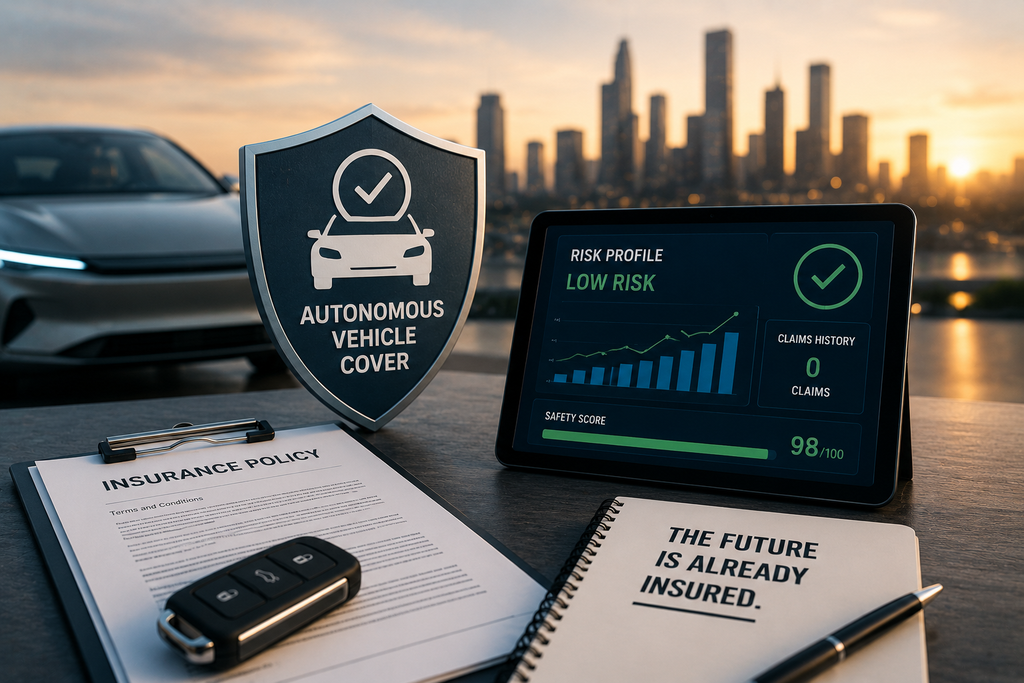
If autonomous vehicles eventually demonstrate a substantial and statistically robust safety advantage over manually driven vehicles, the insurance industry would acquire an enormous financial incentive to distinguish between the two.
Motor insurance is fundamentally concerned with risk. If decades of collision data eventually showed that a manually driven vehicle was several times more likely to be involved in an expensive collision than an autonomous equivalent, insurers could begin reflecting that difference in their premiums. Autonomous vehicles might become exceptionally cheap to insure, while manually driven vehicles became progressively more expensive.
This could produce something more politically acceptable than prohibition: the gradual economic marginalisation of human driving.
A motorist might remain perfectly entitled to drive manually, but doing so could eventually resemble choosing to insure a particularly dangerous or unusual vehicle today. The freedom technically remains; the individual simply bears more of the financial cost associated with the additional risk.
The effects could reinforce themselves.
As autonomous vehicles became safer, insurance premiums could fall. Lower premiums would encourage more consumers and commercial fleets to adopt them. Greater adoption would produce more operational data and potentially further safety improvements. Meanwhile, the remaining manually driven population could increasingly represent a disproportionately high-risk insurance pool, pushing manual premiums higher still.
Commercial fleets could move even faster. A logistics company operating thousands of vehicles would have a powerful incentive to automate if doing so substantially reduced insurance costs, collisions, vehicle downtime and compensation claims. Employers might eventually prohibit manual driving within their fleets even where the law continued to permit it.
The government could therefore find itself in the unusual position of never formally abolishing ordinary driving at all. Instead, insurance companies, employers, fleet operators and consumers could accomplish most of the transition voluntarily.
Automation as an expansion of mobility
This transition would also produce a counterintuitive social consequence: removing the human driver could actually increase personal mobility.
At present, independent road transport is largely restricted to people who can legally and physically operate a motor vehicle. Age, disability, deteriorating eyesight and certain medical conditions can restrict or eliminate a person’s ability to drive safely.
A genuinely autonomous vehicle changes the relevant question from:
“Are you capable of driving this vehicle?”
to:
“Are you capable of telling this vehicle where you want to go?”
That is a profound distinction.
An elderly person who no longer satisfies the medical requirements for a driving licence might still be perfectly capable of travelling independently in an autonomous vehicle. Some visually impaired people who could never obtain an ordinary driving licence could potentially possess something functionally equivalent to a private car for the first time. People whose licences have been medically restricted could retain considerably greater independence rather than becoming dependent upon relatives, taxis or public transport.
This is one reason it would be misleading to describe autonomous vehicles solely as a technology that removes human freedom.
They remove one freedom—the necessity or opportunity to control the vehicle directly—but potentially extend another, more fundamental freedom: the ability to travel independently.
There would, of course, have to be legal distinctions. A person disqualified from driving because of dangerous or criminal behaviour should not necessarily be treated identically to someone who cannot drive because of poor eyesight or physical disability. The law would have to determine whether travelling alone in a vehicle with no human driving controls legally constitutes “driving” at all.
The conceptual difficulty nevertheless illustrates how dramatically autonomy could alter the meaning of the word driver. In a sufficiently automated vehicle, the occupant may legally and practically become a passenger even though they own the vehicle and determine its destination.
From privilege to premium
This leads to another possible stage in the decline of manual driving.
Rather than government announcing that human driving is prohibited, manual control could gradually become a premium activity.
Autonomous vehicles might receive cheaper insurance. Automated HGVs might receive preferential commercial rates. Cities could offer reduced road-user charges to autonomous vehicles with demonstrated safety records. Motorways might introduce automated-only lanes. Employers could prohibit manual operation of company vehicles. Leasing companies could offer substantially better terms for autonomous operation.
At each stage, manual driving would remain legal.
It would simply become more expensive, less convenient and increasingly unusual.
Eventually, learning to drive manually might itself cease to be regarded as an essential rite of adulthood. A generation raised with autonomous taxis and family vehicles might reasonably ask why they should spend hundreds or thousands of pounds obtaining a qualification to perform manually a task that machines perform more safely.
The decline of human driving could therefore resemble the decline of several older technologies: not destroyed by legislation, but displaced because the alternative became overwhelmingly easier.
This possibility creates an important challenge to the prediction that Parliament will eventually enact a dramatic nationwide prohibition.
There may never be a famous Prime Minister who “banned human driving”.
By the time Parliament possessed sufficient evidence and public support to contemplate doing so, most people may already have stopped.
The final restrictions could therefore be remarkably anticlimactic. Government might merely prohibit the remaining manually driven vehicles from particular motorways or urban centres after autonomous vehicles already accounted for the overwhelming majority of journeys.
In this scenario, politicians would not create the autonomous road system.
They would simply formalise a transition that economics, insurance, accessibility and consumer behaviour had already made effectively irreversible.
Leave a Reply