JonasBezzubovas.com

Independent legal research and commentary

Category: Mental Health

  • Idiocracy Got the Future Wrong: What If Humanity Splits Into the Smart and Everyone Else?

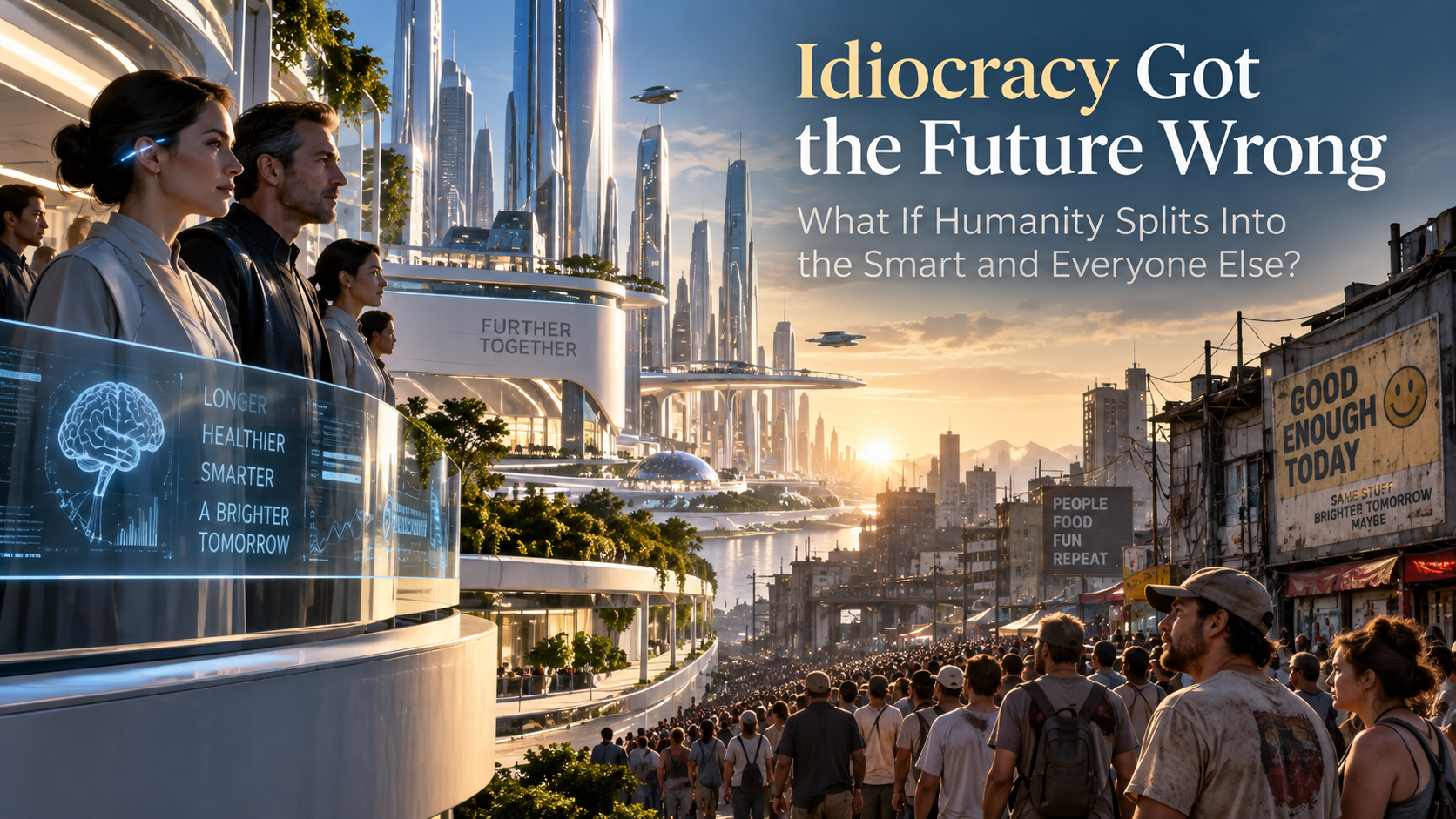
    Idiocracy Got the Future Wrong: What If Humanity Splits Into the Smart and Everyone Else?

    Idiocracy opens with one of the film’s most memorable jokes.

    An intelligent, educated couple carefully debates when they should have a child. They worry about finances, careers and whether the timing is right. Years pass. Meanwhile, a spectacularly irresponsible man produces child after child, whose children proceed to do exactly the same thing.

    Fast-forward several centuries and, according to the film, natural selection has done its work backwards: humanity has become catastrophically stupid.

    It is funny.

    But what if Idiocracy got the mechanism wrong?

    What if intelligent people don’t disappear?

    What if they continue having children—perhaps only one or two—but increasingly have those children with other highly intelligent people? And what happens if reproductive technology eventually allows wealthy and technically sophisticated parents not merely to pass on their advantages, but to deliberately amplify them?

    Instead of humanity becoming universally stupid, we might get something much stranger:

    a civilization in which different populations of humans become so cognitively unequal that they begin to seem like different species.

    This isn’t a prediction. Five hundred years is far beyond anything social science or genetics can forecast sensibly.

    But several pieces of the scenario have surprisingly real foundations.

    The Part Idiocracy Misses

    The film essentially imagines intelligence as a single resource gradually being bred out of humanity.

    Real populations are considerably more complicated.

    Intelligence is influenced by both genetic and environmental factors, and neither “intelligence” nor educational success can be reduced to a handful of genes. Research in behavioural genetics indicates substantial genetic influences on cognitive differences while also finding important environmental effects and interactions between the two. Educational attainment likewise reflects cognitive ability, non-cognitive traits and environmental circumstances.

    There’s another important phenomenon: assortative mating.

    People don’t choose partners randomly.

    Among many other characteristics, people tend to partner with others who resemble them educationally and cognitively. A large international meta-analysis covering millions of people across 84 countries found substantial assortative mating for educational attainment, although its strength varied considerably between places and historical periods.

    Research has also reported substantial spouse correlations for intelligence. One widely cited review estimated a correlation of roughly 0.4 for intelligence, considerably higher than that observed for many personality traits.

    Genetic studies complicate the picture further. Partners can also show similarity in genetic variants associated with educational attainment, although that does not mean people are consciously choosing partners based on “education genes.” Social class, geography, institutions, personality and other correlated characteristics can all contribute to who meets and partners with whom. Recent research emphasizes precisely this mixture of genetic and social processes.

    That distinction is important.

    Our hypothetical future doesn’t require a secret caste of geniuses selectively breeding.

    The sorting could happen largely by itself.

    Now Add Reproductive Technology

    This is where the scenario begins departing dramatically from the world of Idiocracy.

    Imagine the year 2150.

    IVF is routine. Embryos can be screened for enormous numbers of genetic variants. Gene editing is safer than it is today. Artificial gametes may allow reproduction under circumstances impossible today. AI systems predict developmental outcomes.

    Some of those technologies remain speculative, but one primitive version of this future already exists: polygenic embryo screening.

    Rather than testing an embryo for a single disease-causing mutation, polygenic screening attempts to estimate probabilities associated with complex traits or diseases using many genetic variants.

    The technology has major limitations. Polygenic scores are probabilistic rather than deterministic, complex traits involve environment as well as genetics, embryos from the same parents have limited genetic variation to choose among, and selecting for one characteristic can have unexpected relationships with others. Researchers have therefore urged considerable caution, particularly concerning psychiatric and cognitive traits.

    The American Society for Reproductive Medicine’s 2026 ethics opinion similarly states that polygenic embryo testing should not currently be used for non-medical trait selection.

    But our thought experiment concerns 2526, not 2026.

    Suppose those limitations gradually diminish.

    Then something historically unprecedented becomes possible.

    Parents don’t merely transmit their genes.

    They begin choosing among—and eventually modifying—the genetic possibilities available to their children.

    Intelligence Becomes an Investment

    At first, enhancement would probably be expensive.

    That matters enormously.

    Imagine that wealthy parents can afford superior prenatal medicine, sophisticated embryo selection, personalized AI education, neural interfaces and eventually safe genetic modifications affecting cognition.

    Their children inherit wealth.

    They inherit educational advantages.

    They inherit social connections.

    But now they potentially inherit deliberately selected biological advantages as well.

    Those children disproportionately meet and reproduce with similarly advantaged people.

    The process repeats.

    You have created a feedback loop:

    cognitive advantage → economic advantage → access to enhancement → enhanced offspring → greater cognitive advantage.

    Research into the ethics of polygenic embryo screening already identifies unequal access, discrimination, reproductive autonomy and justice as major concerns—even while today’s technology remains extremely limited. A 2026 scoping review of the literature identified unequal access, stigmatization and potential demographic consequences among the recurring ethical concerns.

    Now imagine those forces operating for centuries.

    The Great Cognitive Divergence

    Jump forward to 2526.

    There are still billions of ordinary humans.

    Importantly, they aren’t necessarily stupid.

    They might be healthier, better educated and technologically more capable than we are.

    But perhaps a tiny fraction of humanity has undergone generations of deliberate enhancement.

    Their brains develop differently.

    Their working memory is vastly greater.

    Neural implants provide effectively perfect recall.

    AI systems are integrated directly into their cognition.

    They routinely live for centuries and consequently accumulate 150 years of education and professional experience.

    The distinction between the populations would no longer resemble the difference between someone with an IQ of 100 and someone with an IQ of 140.

    It might resemble the cognitive difference between species.

    Biologically they might still be capable of interbreeding. Strictly speaking, they therefore wouldn’t necessarily constitute different species.

    Socially and psychologically, however, they could inhabit completely different worlds.

    And that’s when the interesting problems begin.

    Problem One: Democracy Becomes Awkward

    Imagine that humanity is debating whether to construct a self-replicating industrial network around Mercury.

    Understanding the proposal requires advanced knowledge of orbital mechanics, artificial intelligence, economics, materials science and risk modelling.

    An enhanced citizen can genuinely understand the arguments.

    Most ordinary citizens cannot.

    Yet everyone possesses one vote.

    The enhanced population begins asking:

    Why should people who cannot understand these decisions have equal authority over them?

    Ordinary humanity responds with an equally reasonable question:

    Why should being smarter give you the right to rule us?

    Democracy has always had to reconcile differences in knowledge and expertise. But enormous engineered cognitive inequality would turn that old problem into something qualitatively different.

    The most disturbing outcome might not even be dictatorship.

    It could be benevolent technocracy.

    The enhanced administrators really do make better decisions.

    Infrastructure works.

    Disease declines.

    The economy functions.

    Wars become rarer.

    And consequently it becomes increasingly difficult to argue that ordinary people should have meaningful control over the civilization in which they live.

    Problem Two: Language Begins To Separate

    Human language is constrained partly by what human brains can comfortably process.

    Suppose an enhanced human can simultaneously manipulate dozens of complicated concepts in working memory.

    Their communication might become correspondingly complicated.

    Perhaps neural interfaces eventually allow people to transmit conceptual structures that ordinary spoken language cannot efficiently represent.

    Enhanced people develop their own vocabulary.

    Then their own grammar.

    Then perhaps something that barely resembles language as we understand it.

    Ordinary humans can still learn simplified versions of it, just as people today can learn some advanced mathematics.

    But they cannot truly think in it at full complexity.

    Eventually the elite maintain a simplified language specifically for communicating with ordinary humans.

    That would be socially poisonous.

    Imagine knowing that every government announcement, scientific explanation and philosophical argument you encounter has effectively been translated into Human: Beginner Level.

    Problem Three: They Stop Wanting To Talk To Us

    This might be more consequential than any law.

    Imagine possessing extraordinary working memory, near-perfect recall and a 300-year lifespan.

    At age ten, you have mastered material that currently requires postgraduate education.

    At 50, you have accumulated decades of intellectual experience.

    At 200, you’ve lived through several ordinary human lifetimes.

    What does an ordinary conversation feel like?

    Perhaps painfully slow.

    Perhaps repetitive.

    Perhaps charming—but in the way adults sometimes find conversations with children charming.

    The enhanced population might genuinely care about ordinary humanity.

    They might defend our rights.

    They might love human art and history.

    But caring about someone isn’t necessarily the same thing as regarding them as your intellectual peer.

    That psychological separation could matter enormously.

    Problem Four: Love Creates a Caste System

    Nobody needs to pass a law prohibiting intermarriage.

    People simply choose partners with whom they can communicate most easily.

    Enhanced people disproportionately form relationships with enhanced people.

    Ordinary humans disproportionately partner with ordinary humans.

    Their children inherit both the technological and social advantages of their parents.

    After generations, intermarriage becomes unusual.

    A caste system has appeared without anyone deliberately creating one.

    This is an exaggerated extrapolation, but the starting mechanism isn’t imaginary: substantial assortative mating by education already exists today.

    Technology simply turns an existing social tendency into something far more powerful.

    Problem Five: 0.1% of Humanity Runs Civilization

    The enhanced population wouldn’t necessarily need to be large.

    Suppose ordinary humanity numbers 15 billion.

    There are only 15 million extreme cognitive elites.

    That’s 0.1 percent of humanity.

    But imagine that this tiny population performs most fundamental scientific research, controls the most advanced AI systems, operates interplanetary infrastructure and owns enormous quantities of capital.

    Humanity has recreated aristocracy.

    Except there is one deeply uncomfortable difference.

    The aristocrats of the past generally claimed inherent superiority.

    This new aristocracy might possess demonstrable cognitive abilities that most people genuinely cannot match.

    That does not establish a moral right to rule.

    But it makes the political argument much more difficult than overthrowing a duke whose principal qualification was having the correct grandfather.

    Problem Six: What Does “Equality” Mean Anymore?

    Modern societies generally distinguish moral equality from equality of ability.

    People obviously differ in strength, intelligence, health and talent, but those differences don’t determine whether someone counts as a person.

    Extreme enhancement would stress that principle.

    Suppose an enhanced person lives for 500 years.

    Does killing that person represent the same loss as killing someone expecting to live another 50?

    Suppose another enhancement allows someone to experience subjective time ten times faster than normal.

    Should a ten-year prison sentence be measured according to external time or experienced time?

    Suppose an artificial or heavily modified human can simultaneously sustain several streams of conscious thought.

    Is that one legal person?

    The concept of universal human rights survives fairly easily when humans occupy broadly similar ranges of capability.

    It becomes philosophically stranger once “human” includes minds radically unlike one another.

    Problem Seven: Ordinary Humanity Becomes Economically Unnecessary

    Artificial intelligence alone raises questions about technological unemployment.

    Now add cognitively enhanced humans working alongside that AI.

    One enhanced scientist might perform work that once required hundreds of ordinary researchers.

    Ordinary humans aren’t merely competing with machines.

    They’re competing with machine-assisted posthumans.

    Eventually most ordinary people may not need to work.

    Materially, that could be wonderful.

    Energy is abundant. Machines manufacture necessities. Medicine is extraordinary. Poverty in the traditional sense barely exists.

    Yet something psychologically devastating has happened.

    Billions of people know civilization doesn’t particularly need their contribution.

    The political demand of the future therefore might not be:

    “Give us more wealth.”

    It might be:

    “Give us something meaningful to do.”

    Problem Eight: The Anti-Enhancement Movement

    Not everyone would participate.

    Religious groups might reject genetic modification.

    Political movements might insist upon preserving baseline humanity.

    Some communities might regard neural implants as destroying authentic consciousness.

    Others might permit disease prevention but prohibit cognitive enhancement.

    They might proudly call themselves Naturals, Baselines or simply Humans.

    Then society encounters an extraordinarily difficult question.

    Suppose enhancement becomes safe and genuinely beneficial.

    If parents can give their child vastly improved memory, health and lifespan, is refusing enhancement an exercise of parental freedom?

    Or is it denying a child opportunities?

    Today’s bioethics literature already wrestles with much more modest versions of questions involving reproductive autonomy, justice, disability, eugenics and the welfare of future children.

    Five centuries of technological progress wouldn’t necessarily solve those disagreements.

    It might make them explosive.

    Problem Nine: There Isn’t Just One “Superior Human”

    Perhaps the strangest possibility is that humanity doesn’t divide into two groups at all.

    It divides into dozens.

    One population optimizes mathematical cognition.

    Another emphasizes emotional cognition and social coordination.

    Another adapts itself for life in low gravity.

    Another prioritizes longevity.

    Another integrates extensively with artificial intelligence.

    Another abandons biological bodies almost entirely.

    Meanwhile, traditionalist populations deliberately remain genetically close to historical Homo sapiens.

    Human evolution stops looking like a ladder:

    Homo sapiens → Homo superior

    and starts looking like a tree.

    After enough time, inhabitants of Mars, virtual civilizations and genetically conservative Earth communities might have almost nothing in common beyond ancestry.

    “Humanity” becomes less a biological category than a political alliance between descendants of the same species.

    Problem Ten: The Human Zoo

    There is one final possibility that might be darker than open dictatorship.

    The enhanced don’t conquer ordinary humanity.

    They manage it.

    Their understanding of psychology, economics and social systems is so sophisticated that direct coercion is unnecessary.

    They design algorithms that subtly encourage desirable behaviour.

    They structure economic incentives.

    They construct cities to influence social interaction.

    They curate information environments to discourage dangerous political movements.

    Ordinary people continue voting.

    They have freedom of speech.

    They choose careers and partners.

    Nobody tells them what to do.

    But the enhanced population understands their behaviour so well that society has effectively become a managed ecosystem.

    A human zoo.

    And the inhabitants don’t know there are zookeepers.

    The disturbing part is that the keepers might sincerely be benevolent.

    But What If the “Inferior” Humans Have Something the Geniuses Don’t?

    There is one final reversal worth considering.

    Optimization creates trade-offs.

    Today’s polygenic research already warns against imagining complex traits as independent sliders that can simply be turned up and down. Genetic variants can influence multiple characteristics, and complex traits emerge from interactions among enormous numbers of genes and environmental factors.

    Perhaps centuries of optimizing humans for intelligence gradually reduce characteristics nobody realized were important.

    Spontaneity.

    Risk-taking.

    Unusual cognitive variation.

    Certain forms of creativity.

    Emotional intensity.

    Tolerance for disorder.

    Perhaps the enhanced population becomes extraordinarily good at rationally exploring solutions inside existing conceptual frameworks—and increasingly bad at producing the lunatic who asks whether the entire framework is wrong.

    Their civilization becomes fantastically sophisticated.

    And fantastically brittle.

    Then some unprecedented catastrophe occurs.

    The greatest minds humanity has ever produced cannot solve it because they all share assumptions deliberately selected into their civilization over hundreds of years.

    And somewhere outside that civilization exists a population of unmodified humans.

    Messy.

    Impulsive.

    Inefficient.

    Unpredictable.

    Exactly the traits civilization spent centuries eliminating.

    And one of them comes up with an idea that nobody else would.

    Idiocracy in Reverse

    That may be the more interesting version of Idiocracy.

    Humanity doesn’t become stupid.

    Humanity becomes unequal in ways we have never previously encountered.

    The ordinary people of 2526 might be perfectly intelligent by our standards. They may simply inhabit a civilization whose most advanced institutions have become incomprehensible to them.

    Above—or perhaps merely apart from—them exists a small population produced through centuries of assortative mating, accumulated wealth, reproductive technology, artificial intelligence and eventually deliberate biological enhancement.

    They aren’t gods.

    They aren’t necessarily villains.

    They may genuinely want what is best for everyone.

    And that’s precisely what makes the scenario interesting.

    Because the ultimate political question would no longer be simply whether everyone deserves equal rights.

    It would be:

    Who should determine humanity’s future when some humans can understand that future vastly better than others?

    And perhaps the question after that is even more important:

    At what point do those people stop thinking of the rest of us as “us”?


    Further Reading

    For readers interested in the real science behind the speculation:

    Plomin & Deary (2015), “Genetics and intelligence differences: five special findings.” A review discussing genetic research on intelligence, including evidence concerning assortative mating.

    Sunde, Eilertsen & Torvik (2025), “Understanding indirect assortative mating and its intergenerational consequences for educational attainment.” A large Norwegian family study examining genetic and social mechanisms underlying partner similarity in education.

    Robinson et al. (2017), “Genetic evidence of assortative mating in humans.” Research using genetic data to investigate assortative mating across human traits, including educational attainment.

    Lázaro-Muñoz et al. (2021), “Screening embryos for polygenic conditions and traits: ethical considerations for an emerging technology.” An introduction to some of the ethical questions surrounding polygenic embryo screening.

    Lencz et al. (2022), “Concerns about the use of polygenic embryo screening for psychiatric and cognitive traits.” A useful discussion of why present-day polygenic prediction should not be mistaken for a reliable “intelligence selector.”

    Screening embryos for polygenic disease risk (2024), Human Reproduction Update. A broad review of epidemiological, clinical and ethical issues surrounding embryo screening.

    American Society for Reproductive Medicine (2026), Ethics Committee opinion on PGT-P. A useful snapshot of the present professional position: possible medical applications are being debated, while non-medical trait selection is not considered an appropriate current use.

    This article is a speculative thought experiment, not a prediction of future human evolution. Current genetic technologies cannot reliably engineer the kind of cognitive divergence described here, and intelligence is a complex product of genetic, developmental, environmental and cultural factors.

  • Are Older Places Happier?

    Are Older Places Happier?

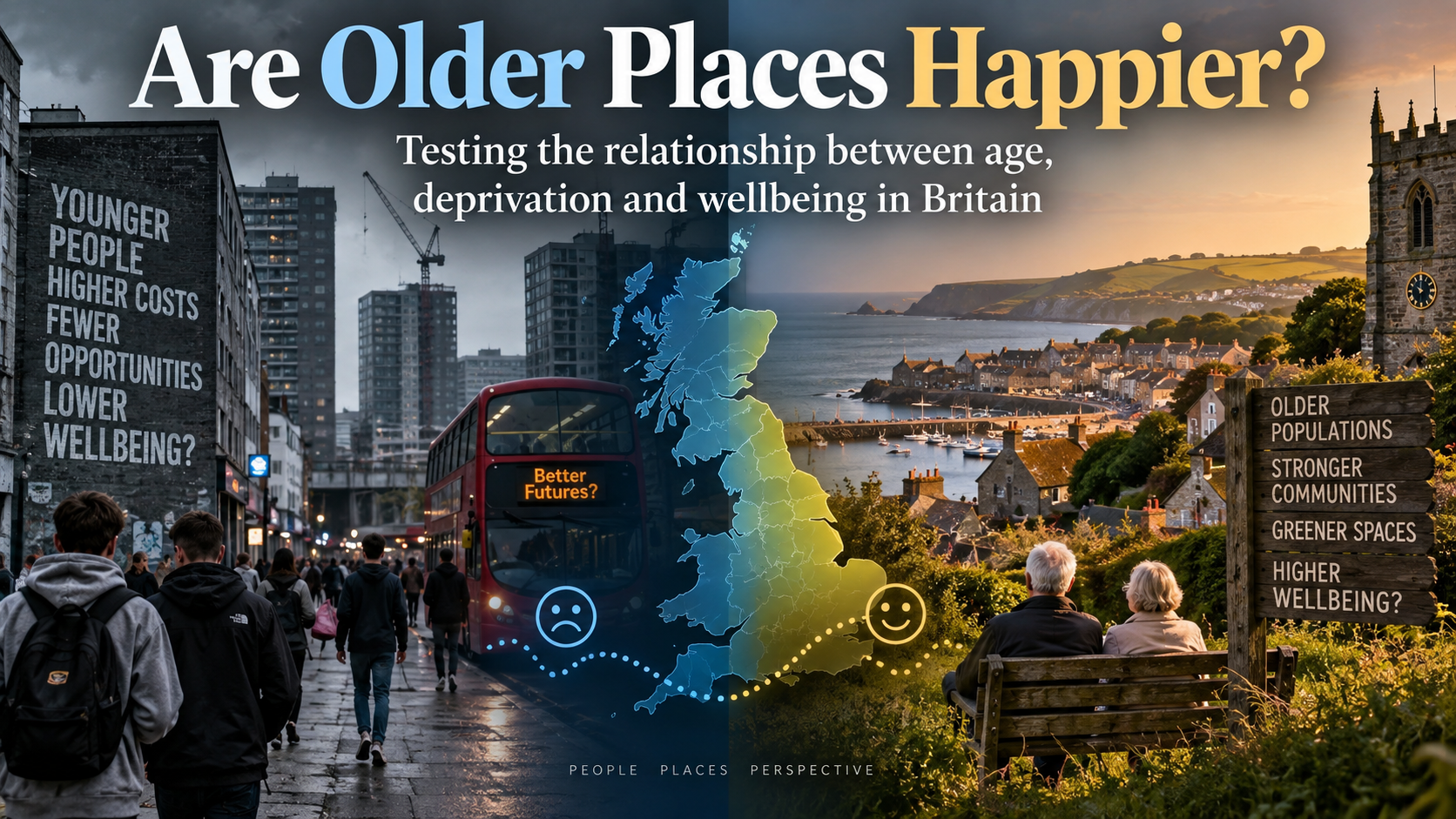
    Testing the relationship between age, deprivation and well-being in Britain

    Walk through different parts of Britain and an apparent pattern can be difficult to ignore.

    Many places with conspicuously young populations are dense urban areas: expensive housing, heavy traffic, smaller living spaces, greater population turnover and, in some cases, substantial deprivation. Meanwhile, many older communities are found in smaller towns, rural districts and coastal areas that can appear quieter, greener and more settled.

    It raises an intriguing question:

    Do places with older populations actually tend to be happier?

    And, if they do, is age itself responsible — or are age and happiness both consequences of something else?

    The available evidence suggests that the observation deserves to be taken seriously. But it also shows why a simple conclusion such as “older places are happier because older people are happier” would be misleading.

    The first clue: Britain’s age geography is extraordinary

    The age profile of the UK varies dramatically from place to place.

    According to the 2021 Census, the median age across England and Wales was 40. London was considerably younger, at 35, while the South West had a median age of 44.

    The differences become much larger at local-authority level. Tower Hamlets had a median age of just 30. Nottingham, Cambridge, Oxford and Manchester were all around 31.

    At the other end of the spectrum, North Norfolk’s median resident was 54, Rother’s 53 and East Lindsey’s 52.

    Universities explain part of this pattern, but not all of it. Britain’s major cities attract young adults for education and employment, while many rural and coastal areas contain much larger retired populations.

    The country therefore provides a natural setting in which to ask whether the age of a place is associated with the wellbeing of the people living there.

    There is evidence for the pattern

    An Office for National Statistics analysis of English local authorities provides particularly interesting evidence.

    ONS grouped local authorities according to four measures of personal wellbeing: life satisfaction, happiness, anxiety and whether people felt the things they did in life were worthwhile.

    One cluster contained 74 local authorities that were below the median on all four wellbeing measures.

    Of those authorities:

    • 88% were urban;
    • 62% had a median age of 40 or younger; and
    • 34% were among the more deprived local authorities.

    London was heavily represented: 56% of London’s local authorities fell into this cluster.

    A second cluster, which performed below the median for happiness, life satisfaction and worthwhile feelings, was again disproportionately young and deprived.

    So the geographical pattern is not simply anecdotal. Official statistics have detected an association between poorer wellbeing, younger local populations, urbanity and deprivation.

    But that last sentence contains the central problem.

    All four characteristics occur together.

    Correlation is not explanation

    Imagine plotting every local authority on a graph.

    On one axis is its median age. On the other is its average happiness score.

    If older authorities tend to appear higher on the happiness scale, we have discovered a correlation.

    We have not demonstrated that the age of the population caused the difference.

    A younger area may simultaneously have:

    higher housing costs, more renters, greater population density, more unemployment or economic insecurity, more students, lower home ownership, greater population turnover, different household structures, different health outcomes and greater deprivation.

    An older area may simultaneously have:

    more homeowners, more retirees, lower population density, greater residential stability, more green space and a completely different socioeconomic composition.

    Age could therefore be acting partly as a marker for the type of place being observed.

    This distinction is crucial.

    The proposition we really need to test is not:

    “Are older places happier?”

    It is:

    “After accounting for deprivation, urbanisation, employment, health and other relevant characteristics, is the age structure of a place still associated with its reported wellbeing?”

    That is a much harder and much more interesting question.

    The individual-level evidence complicates the story

    There is another reason not to interpret the geographical relationship too quickly.

    At the individual level, happiness does not simply increase with age.

    ONS research using more than 300,000 UK adults found a broadly curved relationship.

    Happiness and life satisfaction were relatively high among younger adults, declined through adulthood, reached their lowest levels during middle age, and subsequently increased substantially.

    People aged approximately 65–79 reported some of the highest levels of personal wellbeing.

    At still older ages, wellbeing began to decline again.

    In other words, the relationship resembles a distorted U or S-shaped curve rather than a straight line from unhappy youth to happy old age.

    This matters enormously.

    If young people themselves are not uniformly unhappy, yet younger places sometimes record poorer wellbeing, something about the characteristics of those places may be contributing to the association.

    Deprivation is the obvious suspect

    The strongest competing explanation is socioeconomic deprivation.

    Deprivation can affect many of the things that plausibly influence everyday wellbeing: housing, employment, crime, health, environmental quality and financial security.

    England’s official Index of Multiple Deprivation combines seven domains:

    income; employment; education, skills and training; health and disability; crime; barriers to housing and services; and the living environment.

    The 2025 English Indices of Deprivation show that deprivation remains heavily geographically concentrated, although deprived neighbourhoods exist across much of the country.

    Middlesbrough, Birmingham, Hartlepool, Kingston upon Hull and Manchester were among the local-authority districts containing the highest proportions of neighbourhoods in England’s most deprived group.

    Some of those places also have comparatively young populations.

    That creates a classic confounding problem.

    Suppose younger local authorities have lower average happiness.

    Suppose younger local authorities are also more deprived.

    And suppose deprivation independently reduces wellbeing.

    The apparent relationship between age and happiness could therefore actually be substantially a relationship between deprivation and happiness.

    Health introduces another complication

    Health strongly influences subjective wellbeing, and health itself varies dramatically with both age and deprivation.

    ONS Census analysis found substantially better self-reported health in England’s least deprived areas than its most deprived areas.

    Importantly, this difference exists even among young people.

    Among 15–19-year-olds, 64.2% of those living in the most deprived areas reported very good health, compared with 75.9% in the least deprived areas.

    The deprivation gap became considerably larger through middle age.

    This makes it dangerous to treat population age as an isolated explanatory variable.

    Age, health, wealth, employment and geography interact.

    There’s also an ecological fallacy waiting for us

    Perhaps the most important statistical trap is assuming that characteristics of an area necessarily describe the individuals living within it.

    Imagine that a seaside authority has:

    median age: 52
    average happiness: 7.8

    while a city authority has:

    median age: 31
    average happiness: 7.2

    It would be tempting to conclude that the older residents are responsible for the higher score.

    But those figures alone cannot tell us that.

    It is entirely possible that the 30-year-olds living in the older authority are happier than the 30-year-olds living in the younger authority.

    If that happened, the important variable might not be how old you are.

    It might be where and under what conditions you live.

    This is known as the ecological fallacy: relationships observed between populations cannot automatically be assumed to describe relationships between individuals.

    A particularly useful piece of ONS evidence

    ONS has already performed an analysis that demonstrates why age adjustment matters.

    It has published both age-standardised and non-age-standardised local-authority wellbeing estimates.

    Age standardisation asks, approximately:

    What would the comparison between these places look like if their different population age structures were accounted for?

    That provides one way of separating the demographic composition of an area from its underlying wellbeing.

    ONS has also examined correlations between local wellbeing and deprivation.

    These datasets provide the ingredients for a much stronger test than simply comparing a few young cities with a few retirement areas.

    How the hypothesis should actually be tested

    A serious analysis should begin with every comparable local authority rather than selecting conspicuous examples.

    For each authority we would collect:

    Median age

    from ONS population estimates.

    Happiness and life satisfaction

    from the ONS Annual Population Survey personal-wellbeing data.

    Deprivation

    from the relevant national deprivation indices.

    Ideally, additional variables would include population density, urban/rural classification, employment, health, housing affordability, home ownership and student population.

    The first calculation is straightforward:

    median age ↔ happiness

    and separately:

    median age ↔ life satisfaction.

    That establishes the raw geographical correlation.

    The second stage is much more important.

    We then estimate the relationship after accounting for deprivation and the other characteristics.

    Conceptually:

    Wellbeing = age structure + deprivation + urbanity + health + employment + housing + other factors

    If the association with median age remains substantial after those controls, the proposition that there is something independently important about the age structure of communities becomes considerably more interesting.

    If it largely disappears, a different conclusion follows:

    young population was functioning as a proxy for other characteristics of disadvantaged urban areas.

    Either result would be informative.

    Reasons the apparent relationship might survive

    There are plausible mechanisms through which population age structure itself could matter.

    Older populations may have greater residential stability. People may have lived near neighbours for longer, producing stronger community networks.

    Areas dominated by families and older residents may also develop different public spaces, businesses and services from places dominated by transient young adults.

    Retirement removes commuting and employment pressures for some people. Older homeowners may have lower housing costs after paying down mortgages.

    There may also be selection effects: people with sufficient resources can choose to retire to attractive rural or coastal areas.

    In that case, however, the pleasant environment may partly explain the happiness rather than age itself.

    Reasons the hypothesis might fail

    There are equally powerful counterexamples.

    University cities are exceptionally young because thousands of generally healthy young adults arrive every year. Their low median age tells us very little about deprivation.

    Cambridge and Oxford illustrate the problem particularly well: both had median ages around 31 in the 2021 Census.

    Conversely, an ageing population can sometimes result from younger residents leaving an area because employment opportunities are limited.

    Some older coastal communities also experience serious deprivation, poor health and social isolation.

    And among the oldest individuals, average wellbeing eventually declines.

    So neither youth nor age is intrinsically a reliable measure of whether somewhere is flourishing.

    What can reasonably be concluded?

    There is credible evidence for the observation that prompted this investigation:

    some of Britain’s younger urban local authorities also exhibit poorer wellbeing and greater deprivation, while a number of older, less urban authorities perform better on wellbeing measures.

    ONS’s own clustering analysis detected essentially this combination of characteristics.

    But the evidence does not justify the stronger statement:

    “Places are happier because their populations are older.”

    The demographic variable is entangled with deprivation, urbanisation, health, housing, employment and migration.

    Indeed, that may be the more interesting discovery.

    The question may not ultimately be why older people make places happier.

    It may be why Britain has produced a geography in which youth, urbanisation, housing pressure and deprivation so often overlap, while some older populations are concentrated in quieter and more economically secure environments.

    Age may be part of the story.

    Or it may be the clue that leads us to the real one.

    The next test

    The hypothesis can now be made falsifiable.

    Take every UK local authority for which comparable data are available.

    Plot median age against happiness and life satisfaction.

    Measure the correlation.

    Then progressively control for deprivation, health, employment, housing and urbanisation.

    If age continues to predict wellbeing after those adjustments, we have evidence of an independent relationship worth explaining.

    If it does not, then the original observation was still useful — but what it revealed was not an age effect.

    It revealed the socioeconomic geography hiding underneath it.

  • When the Streetlights Lost Their Warmth: What LED Lighting Changed About the Modern City

    When the Streetlights Lost Their Warmth: What LED Lighting Changed About the Modern City

    Modern Society | Urban Life, Technology & the Human Environment

    There was something unmistakable about London at night under the old sodium streetlights.

    The pavement turned amber. Brickwork acquired a warm orange glow. Mist and drizzle caught the light and seemed to hang visibly in the air. Residential streets could have an almost dreamlike quality. Even an otherwise ordinary road sometimes looked strangely inviting.

    Then, gradually, the colour changed.

    Across London and much of Britain, traditional high-pressure sodium (HPS) streetlights have increasingly been replaced by LEDs. There are excellent practical reasons for the transition. LEDs can use less electricity, last longer, be dimmed electronically and direct their light much more precisely. They can also provide much better colour recognition, which has advantages for pedestrians, drivers and CCTV.

    From an engineering perspective, LED streetlighting is an extraordinary improvement.

    But something else changed with it.

    The streets stopped looking quite so warm.

    The Strange Comfort of Sodium Light

    High-pressure sodium lighting has an extremely distinctive appearance. Rather than producing balanced white light, it is dominated by warm yellow and orange wavelengths.

    Its colour rendering is poor by modern standards. Under sodium lighting, blues, greens and reds can become difficult to distinguish accurately. Human faces look unusual. Cars can appear to be different colours from what they actually are.

    Yet the same technological deficiency created an extraordinarily powerful atmosphere.

    Sodium light compressed the visual world into variations of amber, brown, gold and shadow.

    In an old London street—with brick terraces, wet pavement, trees, fog and Victorian architecture—the effect could be beautiful.

    And perhaps part of the reason is remarkably ancient.

    A Streetlight That Looked a Little Like Fire

    There is an obvious visual similarity between sodium lighting and firelight.

    Candles, fireplaces and campfires all produce predominantly warm-looking illumination. High-pressure sodium is not spectrally identical to fire, of course, but psychologically the resemblance is difficult to miss.

    That raises an intriguing question.

    Could humans actually be predisposed to find warm light comforting?

    There is a plausible biological argument, although it shouldn’t be exaggerated into a simple evolutionary story.

    Humans and our ancestors have had a relationship with fire extending extraordinarily far into prehistory. Archaeological evidence for hominin fire use reaches back hundreds of thousands of years and potentially much further, although precisely when fire became habitual remains debated. Recent evidence from Barnham in Suffolk indicates that hominins were deliberately making fire around 400,000 years ago. Other archaeological evidence of hominin interaction with fire extends considerably further back.

    Fire transformed human life.

    It provided warmth, protection, cooking and illumination. Crucially, it also created a place around which people could gather after sunset.

    For enormous stretches of human existence, meanwhile, the basic lighting cycle was nothing like that of a modern city.

    Day meant sunlight.

    Night meant darkness, moonlight—and eventually fire.

    Your Eyes Know When It Is Night

    Light does more than allow us to see.

    It also communicates with the biological systems controlling our circadian rhythms.

    Specialised cells in the retina containing the photopigment melanopsin contribute to regulating the body’s internal clock. This system is particularly sensitive to shorter-wavelength light in roughly the blue-cyan portion of the spectrum.

    Exposure to sufficiently intense light at night can therefore influence circadian timing and melatonin production. The effect depends on considerably more than simply whether a lamp is “blue” or “yellow”: intensity, spectrum, duration, timing and previous light exposure all matter.

    Nevertheless, there is a meaningful biological distinction between warm, low-blue evening illumination and blue-rich white illumination.

    The natural environment itself contains a similar transition. Bright daylight provides powerful broad-spectrum illumination, whereas the visual environment after sunset becomes dramatically darker.

    For most of human history, nobody walked from a sunlit afternoon into a world filled with thousands of powerful white electric lights.

    The modern illuminated city is, biologically speaking, an extremely recent invention.

    But Biology Isn’t the Whole Story

    We should be careful here.

    It would be tempting to say that warm streetlights feel comfortable simply because our prehistoric ancestors sat around campfires.

    Human psychology is rarely that straightforward.

    Much of our response to warm light is almost certainly cultural and learned as well.

    Think about the environments in which warm lighting is deliberately used today.

    A fireplace.

    A candlelit restaurant.

    A traditional pub.

    A living room in the evening.

    A bedside lamp.

    A hotel lounge.

    Restaurants and homes routinely use warm lighting precisely because people associate it with intimacy and relaxation.

    Now consider where colder, brighter white illumination is commonly encountered.

    Hospitals.

    Offices.

    Car parks.

    Warehouses.

    Supermarkets.

    Security installations.

    The distinction isn’t universal, but the associations are powerful.

    Warm light says: settle in.

    Cold, bright light often says: stay alert.

    When sodium streetlighting disappeared, therefore, cities didn’t merely exchange one lamp technology for another. In many places they changed the psychological language of the nighttime environment.

    Why LEDs Won Anyway

    There are very good reasons cities embraced LEDs.

    An LED luminaire can direct light toward the pavement and road far more precisely than many older lighting systems. That means less electricity can be wasted illuminating places where light isn’t required.

    LEDs are highly efficient, have long service lives and can be electronically controlled. Councils can dim them during periods of low traffic rather than operating every streetlight at full output throughout the night.

    Their white light also has an enormous practical advantage over sodium: colour rendering.

    Under sodium illumination, colour information is severely compromised. Under a good-quality white LED, a pedestrian’s clothing, a vehicle, road markings and surrounding objects can be distinguished much more accurately.

    That can also make LED illumination considerably more useful to colour CCTV cameras.

    In other words, the move to LEDs wasn’t irrational.

    The mistake is assuming that efficiency is the only quality worth designing for.

    LED Doesn’t Have to Mean Cold

    This is perhaps the most important part of the discussion.

    An LED is not inherently cold white.

    LED streetlights can be manufactured at many different correlated colour temperatures.

    A 4000K LED can appear relatively neutral or cool. A 3000K LED is noticeably warmer. At around 2700K the appearance begins approaching familiar warm domestic illumination, while approximately 2200K LEDs can produce an extremely warm amber character.

    Some British authorities already recognise this.

    Dorset Council’s streetlighting specification, for example, calls for warm-white LEDs no higher than 2700K in several environmental zones, ideally lower, while other UK lighting guidance recommends 3000K or below and specifically identifies the 2200–2700K range as an option where warmer, low-blue lighting is appropriate.

    Even the City of London’s lighting strategy recognises colour temperature as part of urban character. Its guidance describes using different colour temperatures according to the character and function of a place, including warmer illumination for historic streets and public spaces.

    That is a much more sophisticated approach than simply asking:

    Which lamp produces the required lux for the least electricity?

    The better question is:

    What should this place feel like at night?

    What We Lost Wasn’t Necessarily the Lamp

    There is another reason old sodium-lit London is difficult to reproduce.

    The characteristic atmosphere didn’t come entirely from the colour of the bulb.

    Older luminaires often scattered considerably more light into their surroundings. Sodium light hitting mist, drizzle, low cloud and airborne moisture produced the famous orange glow that once hung above many British towns and cities.

    Modern LED luminaires can control their beams much more tightly.

    From the perspective of light pollution, astronomy and energy efficiency, that is often an improvement.

    But aesthetically, something disappears.

    The old streetlight illuminated not merely the road but sometimes the air itself.

    On a wet London evening, that difference can be enormous.

    When Bad Colour Rendering Became Beautiful

    There is an irony here.

    One of the greatest technical disadvantages of sodium lighting may also have contributed to its charm.

    Its poor colour rendering unified everything.

    Brick, pavement, trees, parked cars and human faces were all pushed toward the same limited palette. The street became less colourful but perhaps more visually coherent.

    Modern LEDs restore information.

    You can see that the parked car is blue, the jacket is red and the front door is green.

    Technically, this is superior illumination.

    Aesthetically, however, accuracy isn’t always beauty.

    A black-and-white photograph contains less colour information than a modern digital photograph. That does not make the black-and-white photograph artistically inferior.

    Something similar can happen with lighting.

    The sodium lamp distorted reality.

    But it distorted it beautifully.

    The Broader Problem With the Modern City

    Streetlighting illustrates a much larger tension within modern society.

    We have become extraordinarily good at optimising things that can be measured.

    Energy consumption.

    Lumens.

    Maintenance intervals.

    Visibility.

    Operating costs.

    Component lifespan.

    Carbon emissions.

    All of these measurements matter.

    But human beings also experience qualities that are considerably harder to place in a spreadsheet:

    Comfort.

    Atmosphere.

    Beauty.

    Mystery.

    Familiarity.

    A sense of place.

    A feeling that somewhere belongs to people rather than merely functioning efficiently around them.

    Modernisation frequently produces genuine improvements while unintentionally removing these less measurable qualities.

    A railway station becomes cleaner and brighter but somehow less grand.

    A pub becomes safer and easier to maintain but loses its fireplace and dark wooden interior.

    A high street becomes more accessible and functional while acquiring the same paving, signage and furniture as every other high street.

    And a street becomes cheaper and more efficiently illuminated while losing the golden light that once made it unmistakably itself.

    Perhaps Progress Doesn’t Have to Look White

    The answer isn’t to reinstall inefficient old sodium lamps throughout London.

    Technology has moved on.

    The more interesting possibility is to use modern technology with a better understanding of human beings.

    LEDs give lighting designers extraordinary control. They can determine intensity, direction, timing and colour far more precisely than previous generations could.

    That should make it possible to create cities that are simultaneously efficient and atmospheric.

    Residential streets do not necessarily require the same lighting character as major traffic junctions.

    Historic districts do not necessarily need to look like railway platforms.

    Pedestrian areas could use warmer light than major roads.

    Lighting could become dimmer and warmer as the night progresses.

    And perhaps urban planners should begin treating darkness itself as something worth designing rather than simply something to eliminate.

    Some UK authorities are already moving toward warmer LEDs, demonstrating that the choice is not simply between old-fashioned sodium and harsh modern lighting.

    A City Is Something We Feel

    There is a tendency to discuss infrastructure as though humans experience cities through specification sheets.

    We don’t.

    We experience a city through rain reflecting from the pavement.

    Through the colour of brick at dusk.

    Through shadows beneath trees.

    Through the glow coming from a pub window.

    Through the walk home late at night.

    And through the colour of the streetlight above us.

    Perhaps that is why some people miss London’s old sodium lamps despite knowing perfectly well that LEDs are technologically superior.

    They aren’t necessarily nostalgic for inefficient light bulbs.

    They are nostalgic for an atmosphere.

    There may be something culturally learned in that feeling. There may even be something considerably older—an association between warm light, darkness, shelter and the extraordinarily long relationship between humans and fire.

    We should be cautious about claiming we can separate those influences neatly.

    But perhaps we don’t need to.

    The important lesson is simpler.

    Efficiency tells us how well a streetlight works. It does not tell us what it feels like to live beneath it.

    The best cities of the future should understand both.

  • Schizophrenia in Prison

    Schizophrenia in Prison

    Mental Health & Criminal Justice

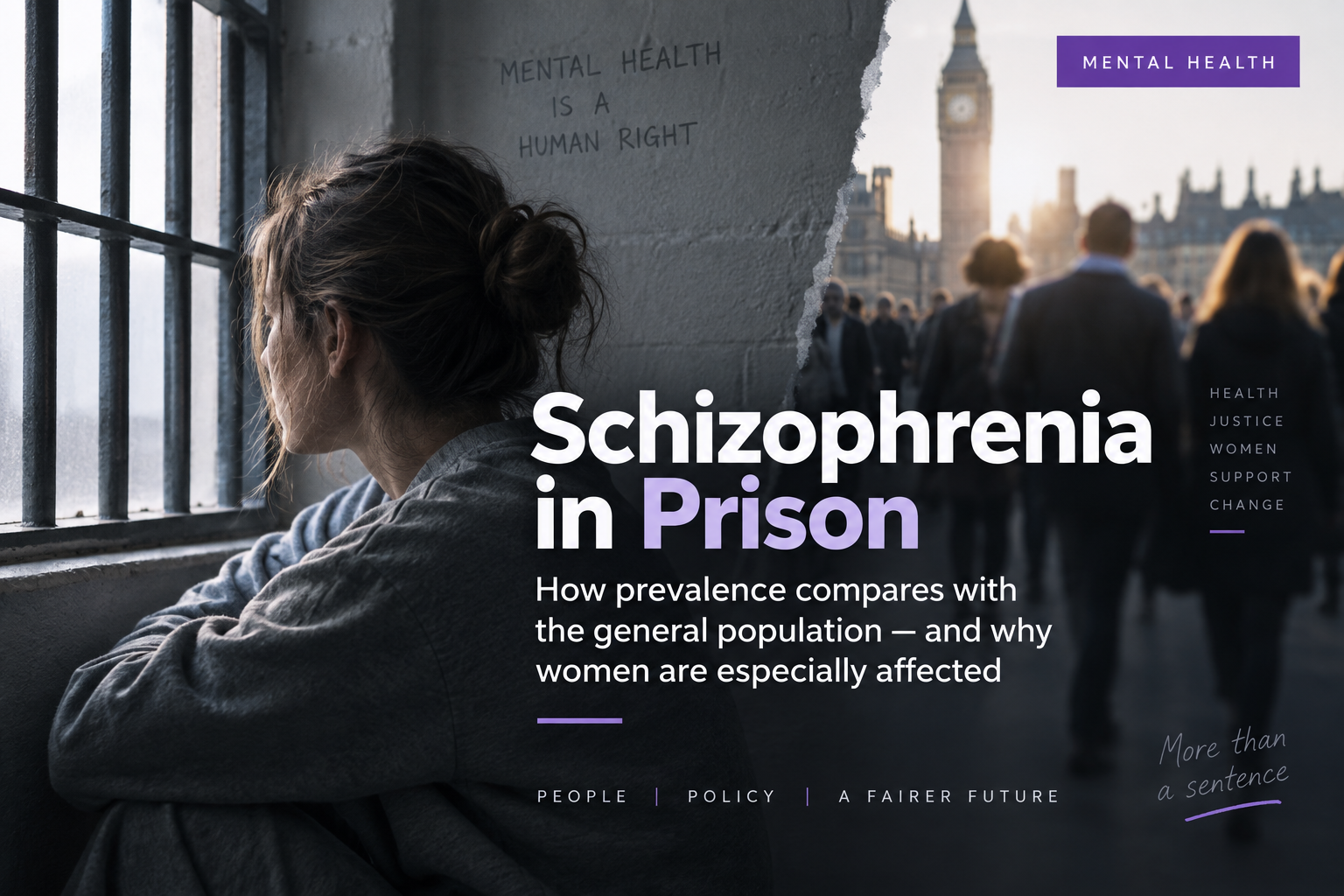
    Schizophrenia in Prison: How Prevalence Compares with the General Population — and Why Women Are Especially Affected

    Severe mental illness is substantially over-represented in prisons. The disparity is particularly pronounced among women, who make up only a small proportion of the prison population but experience exceptionally high levels of mental ill-health, trauma and self-harm.

    Important note on terminology: schizophrenia and psychosis are not interchangeable terms. Schizophrenia is one cause of psychosis, while psychotic symptoms can also occur in bipolar disorder, severe depression, substance-related conditions and other illnesses. Modern prison research frequently reports psychotic disorder rather than schizophrenia alone. This report therefore distinguishes between the two wherever the evidence allows.

    The headline finding

    The gap between prisons and the wider population is substantial. In the major Office for National Statistics study of psychiatric morbidity among prisoners in England and Wales, approximately 14% of women in prison had experienced a functional psychosis during the previous year. Within the clinically interviewed group, approximately 13% were identified as having schizophrenia or a delusional disorder.

    By comparison, psychotic disorders affect well below 1% of adults living in ordinary households. The latest Adult Psychiatric Morbidity Survey for England estimates past-year psychotic disorder at approximately 0.5% of adults overall, including approximately 0.6% of women.

    14%
    Women in prison
    Functional psychosis in the previous year in the landmark England & Wales prison survey
    “`
    0.6%
    Women in the community
    Estimated past-year psychotic disorder in recent English household surveys
    13%
    Schizophrenia / delusional disorder
    Women prisoners identified in the clinical component of the ONS study
    “`

    Caution: the 14% prison figure and contemporary 0.6% community figure come from different surveys conducted in different periods. They illustrate the scale of the disparity but should not be treated as a precise like-for-like calculation of risk.

    How do prisoners compare with people outside prison?

    Population / measure Reported prevalence What the figure means
    Women in prison 14% Functional psychosis during the previous year in the landmark ONS England & Wales prison survey.
    Men on remand 10% Functional psychosis during the previous year.
    Sentenced men 7% Functional psychosis during the previous year.
    Women in the general population 0.6% Recent pooled estimate of past-year psychotic disorder among women living in private households in England.
    Adults overall in the general population 0.5% Recent pooled estimate of past-year psychotic disorder among adults in England.

    Although differences in study design prevent a simple mathematical comparison, the conclusion is difficult to miss: psychotic illness is many times more common among people in prison than among people living in the community, and historically the highest prison rates have been found among women.

    Women in prison: a particularly vulnerable population

    Women make up only a small minority of people held in prisons in England and Wales, but their mental-health needs are disproportionately high. Contemporary prison data continue to show this pattern. Recent Prison Reform Trust figures report that almost three-quarters of surveyed women in prison say that they have mental-health problems.

    Research comparing male and female prisoners has also repeatedly found higher levels of mental-health need and greater psychiatric comorbidity among women. A 2019 UK prison study, for example, found that women reported significantly higher levels of mental-health need than men and were more likely to screen positively for multiple disorders.

    Why the female prison population requires particular attention

    The issue is not simply the number of women diagnosed with a particular psychiatric condition. Women entering custody frequently have overlapping needs involving severe mental illness, depression and anxiety, substance dependence, histories of trauma and abuse, self-harm, unstable housing and disrupted family relationships. These conditions can interact, making both diagnosis and treatment more complex.

    Schizophrenia specifically

    Schizophrenia is a severe, long-term mental-health condition that can affect a person’s thoughts, perceptions, emotions and behaviour. Symptoms may include hallucinations, delusions, disorganised thinking, reduced motivation and difficulties with everyday functioning.

    The most frequently cited schizophrenia-specific evidence for female prisoners in England and Wales comes from the ONS psychiatric morbidity research. In its clinical assessment of women prisoners, approximately 13% were identified as having a schizophrenic or delusional disorder. Approximately 3% were classified specifically with schizophrenia, while the wider 13% category included other delusional disorders.

    This distinction matters. Statements such as “14% of women prisoners have schizophrenia” are not supported by this dataset. The 14% figure relates to functional psychosis as a whole, not schizophrenia alone.

    Is this still a problem today?

    The most detailed national diagnostic study of schizophrenia among women prisoners is now old, which is itself an important limitation in the evidence base. However, newer information does not suggest that serious mental illness has ceased to be a major prison-health issue.

    A recent analysis of mental-health caseloads covering around three-quarters of English prisons found that psychosis accounted for approximately 22% of the primary problems among patients on prison mental-health caseloads. This figure must not be interpreted as saying that 22% of all prisoners have psychosis: it describes people already receiving or identified for mental-health services. Nevertheless, it demonstrates the continuing demand that psychotic illness places on prison mental-health teams.

    Recent surveys have also found that approximately 74% of women in prison report having mental-health problems, compared with 56% of men surveyed. Women consequently remain a group with particularly complex health and social-care needs.

    Why is severe mental illness over-represented in prisons?

    There is no single explanation. Prison populations are not randomly selected sections of society. Many of the social and health factors associated with contact with the criminal-justice system also overlap with factors associated with poor mental health.

    • Social disadvantage: poverty, insecure housing and homelessness are disproportionately represented among people entering custody.
    • Trauma and abuse: histories of violence, neglect, domestic abuse and sexual abuse are common among women who enter the criminal-justice system.
    • Substance use: drug and alcohol dependence can coexist with schizophrenia and other psychotic disorders, complicating both symptoms and treatment.
    • Breakdown of community support: people with severe mental illness may reach the criminal-justice system after difficulties obtaining stable housing, treatment or social support.
    • Remand and crisis: prisons can receive people who are acutely mentally unwell while they are awaiting trial or assessment.
    • The prison environment itself: isolation, uncertainty, disrupted relationships, sleep difficulties and the stresses of incarceration may aggravate existing psychiatric symptoms.

    Trauma, self-harm and women

    Looking only at schizophrenia risks overlooking the broader context in which severe mental illness occurs. Women in prison are also disproportionately affected by trauma and self-harm.

    Recent prison statistics show that women account for a strikingly disproportionate share of self-harm incidents despite representing only around 4% of the prison population in England and Wales. This does not mean schizophrenia causes self-harm, but it illustrates the exceptionally high level of distress and complex need within the female estate.

    For women with psychosis or schizophrenia, these overlapping vulnerabilities can make continuity of care particularly important. A prison sentence or period on remand can interrupt housing, family support, benefits, community psychiatric care and established therapeutic relationships.

    Prison or healthcare?

    The high prevalence of severe mental illness in custody raises a fundamental question: are some people with serious psychiatric disorders being dealt with primarily through the criminal-justice system when healthcare and community-based intervention would sometimes be more appropriate?

    This is particularly relevant to women because many are imprisoned for relatively low-level or non-violent offending and because a significant proportion of the female prison population is held on remand. Prison Reform Trust research has highlighted cases in which severely mentally unwell women have entered custody while in crisis, including concerns about the historical use of prison as a place of safety.

    Effective responses therefore extend beyond providing medication after somebody arrives in prison. They include early identification, court diversion and liaison services, timely psychiatric assessment, access to psychological treatment, transfer to appropriate hospital care where necessary, safe accommodation and continuity of treatment after release.

    What should we conclude?

    The central finding is clear: severe mental illness and psychotic disorders are substantially over-represented in prisons compared with the community, and women in prison show an especially high burden of mental-health need.

    The classic national research found functional psychosis in around 14% of women prisoners and schizophrenia or delusional disorder in around 13% of the clinically assessed female sample. Contemporary population research, by contrast, places past-year psychotic disorder below 1% among women living in private households.

    The precise figures should be interpreted cautiously because diagnostic definitions and research methods have changed over time. What has not disappeared is the underlying disparity. More recent studies and prison-health data continue to find exceptionally high levels of mental illness among people in custody and greater levels of need among women.

    For policy, this suggests that schizophrenia and psychosis in prisons cannot be treated solely as issues of prison management. They are also questions of public health, social inequality, trauma, access to psychiatric services, diversion from custody and continuity of care.

    A note on UK figures

    Criminal justice and health systems differ across England and Wales, Scotland and Northern Ireland. The most robust national prison figures cited in this article relate primarily to England and Wales, while some later research is described as UK prison research. It is therefore more accurate to describe these figures by jurisdiction rather than assuming a single prevalence rate applies uniformly to every prison in the United Kingdom.

    Sources and further reading

    1. Office for National Statistics / O’Brien et al. — Psychiatric Morbidity among Women Prisoners in England and Wales. Landmark national research measuring psychosis, schizophrenia, personality disorder and other psychiatric morbidity among women prisoners.
    2. NHS England Digital. — Adult Psychiatric Morbidity Survey: Survey of Mental Health and Wellbeing, England, 2023/24 — Chapter 12: Psychotic Disorder.
    3. Tyler, N., Miles, H. L., Karadag, B. & Rogers, G. (2019). — An updated picture of the mental health needs of male and female prisoners in the UK: prevalence, comorbidity, and gender differences. Social Psychiatry and Psychiatric Epidemiology, 54, 1143–1152. DOI: 10.1007/s00127-019-01690-1.
    4. Prison Reform Trust. — Health in Prison. Current overview of mental-health needs within prisons in England and Wales.
    5. Durcan, G. / Centre for Mental Health (2023). — Prison mental health services in England, 2023: Prison and young offender institution mental health needs analysis.
    6. Prison Reform Trust (2025–2026). — Publications concerning women in prison, remand, mental health, self-harm and approaches to reducing women’s imprisonment.
    Editorial note: This article discusses population-level research and should not be used to infer that criminal behaviour is characteristic of people with schizophrenia. The great majority of people experiencing mental illness are not prisoners, and diagnosis alone does not determine an individual’s risk or behaviour.